Hot Springs Village POA Fees and Amenities Explained
May 28, 2026
May 28, 2026
Wondering whether Hot Springs Village POA fees are “just HOA dues” or something much bigger? That is a smart question, because in Hot Springs Village, ownership costs often cover far more than a typical neighborhood association. If you are thinking about buying in the Village, this guide will help you understand the 2026 POA fees, what those charges appear to support, and how the amenities fit into the overall value. Let’s dive in.
Hot Springs Village is a private, master-planned community that spans Garland and Saline counties. The Property Owners’ Association, or POA, oversees a wide range of services and assets inside the community.
That scope includes public safety, roads and infrastructure, amenities, lakes, and common property. Because of that broad role, the fee structure works differently from what you might expect in a standard subdivision HOA.
The 2026 fee schedule starts with a base annual assessment that depends on whether the lot is improved or unimproved.
For many buyers, the improved-lot assessment is the number that matters most because it usually applies to a home you plan to occupy. If you are buying land only, the unimproved-lot assessment may apply instead.
In addition to the recurring assessment, Hot Springs Village has a first-time buyer buy-in fee.
This is an important cost to budget for early in the buying process. If you are comparing homes inside and outside the Village, this upfront fee can affect your true cash-to-close picture.
Assessments are due on the first day of the month. The bylaws also allow annual assessment increases by a two-thirds board vote, subject to the CPI rule in the bylaws, while special assessments require member approval.
For you as a buyer, that means it is wise to confirm the current amount, ask whether any increase has been approved, and check whether any special assessment is pending or already authorized.
One of the biggest reasons Hot Springs Village fees can feel higher than a typical HOA is that the assessment appears to support much more than pool access or front-entry landscaping.
According to the bylaws, annual assessments may be used for taxes, insurance, maintenance and replacement of facilities and equipment, road and street maintenance, municipal services, and repairs or replacement of amenities tied to recreation, health, safety, and welfare.
In practical terms, that suggests the assessment functions partly as an infrastructure fund, not just a recreation fee. That distinction matters when you are deciding how to evaluate the monthly cost of ownership.
The POA owns the road right-of-way in the community. It also states that utilities in that corridor include water, wastewater, electrical, telephone, and cable facilities.
The POA’s operating footprint also includes water, wastewater, public works, and public utilities functions. Residential rules further state that every occupied residence receives normal household trash service, with one trash can included in the monthly sanitation fee.
The budget-prioritization policy highlights several high-priority spending areas. These include:
When you look at that list, it becomes easier to see why Village ownership costs are broader than what you may see in many subdivisions. You are not only contributing to shared amenities, but also to systems and services that support day-to-day life across the community.
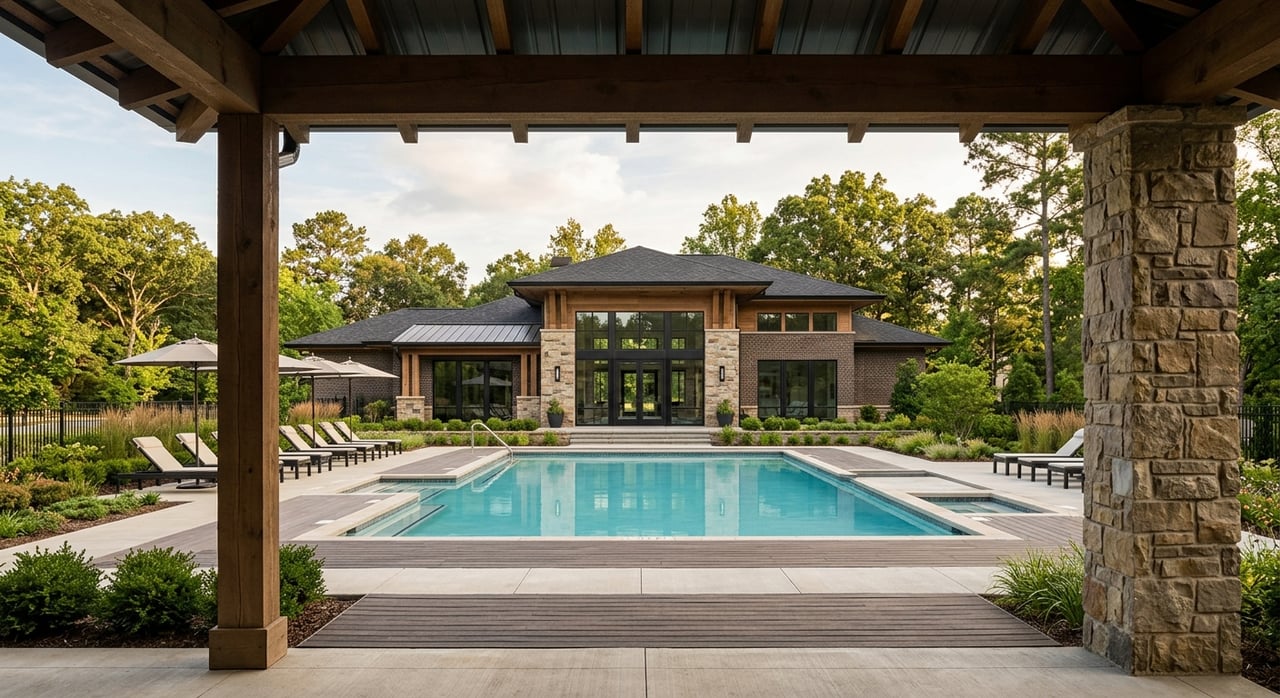
Hot Springs Village is widely known for its large amenity package. The community advertises:
For buyers who want an active lifestyle, that mix is a major part of the Village appeal. It supports a range of interests, from golf and lake recreation to walking trails, fitness, and social groups.
This is one of the most important questions to ask before you buy. The fee schedule is organized into separate sections for golf, guest and family golf, recreation amenities, rental facilities, boats and lakes, utilities, permitting and inspections, public safety, and animal control.
Based on how that schedule is organized, buyers should assume some amenities and activities are usage-based or optional rather than automatically included in the monthly assessment. That fits with the bylaws, which give the board authority to levy service or use charges for common properties.
If you plan to golf often, keep a boat, rent facilities, or use specialized recreation options, your total cost of ownership may go beyond the base POA assessment. On the other hand, if you mainly want the setting, security features, and access to the broader community environment, your add-on costs may be lower.
That is why lifestyle fit matters so much in Hot Springs Village. Two buyers can own similarly priced homes but have very different monthly budgets depending on how they use the community.
Hot Springs Village also includes a level of internal service that many buyers do not expect from a POA community. The Village has staffed gates, its own police department with 19 certified officers, and its own fire department with four stations.
That is part of the overall value proposition and also part of what makes the Village different from many standard HOA neighborhoods. These services are tied to the broader operational role the POA plays inside the community.
Bella Vista is often the closest Arkansas comparison because it is also a POA-centered recreational community. But the structure is not the same, and that difference is important.
Bella Vista is incorporated as a city, so city government handles police, fire, EMT, road maintenance, public trails, planning and permitting, and trash. In Hot Springs Village, the POA covers roads, public safety, and utilities inside the community itself, which helps explain why HSV’s assessment is broader.
The amenity mix is also a little different between the two communities.
| Community | Golf Courses | Lakes | Trails |
|---|---|---|---|
| Hot Springs Village | 9 | 11 | 30+ miles |
| Bella Vista | 7 | 7 | 80+ miles and growing |
In simple terms, Hot Springs Village tends to lean more toward golf and lake living, while Bella Vista leans more toward trail and biking access. Neither is automatically better. It depends on the lifestyle you want.
Bella Vista’s available-lot POA assessment is currently $16 per month, but that is not a like-for-like comparison with Hot Springs Village homeowner dues. Bella Vista splits more municipal services between the city and the POA.
So if you are comparing Arkansas planned communities, the better question is not just, “Which one has lower dues?” A smarter question is, “What services, infrastructure, and amenities are those dues actually supporting?”
If you are considering a home or lot in Hot Springs Village, it helps to review a few cost questions before you make an offer.
This kind of upfront review can help you avoid surprises after closing. It also makes it easier to compare Village homes with other options in Hot Springs, Hot Springs Village, and surrounding Central Arkansas markets.
POA fees should always be viewed in context. In Hot Springs Village, the assessment appears to support a broader ownership model that includes infrastructure, utilities, public safety functions, and a large amenity network.
If the Village lifestyle matches what you want, those costs may feel more understandable when you see the full picture. The key is making sure the property, fee structure, and amenity access all fit your budget and day-to-day goals.
If you want help comparing Hot Springs Village homes, reviewing ownership costs, or deciding whether the Village is the right fit for your lifestyle, connect with Bailey & Company Real Estate. Lindsey & Krystina bring local guidance, clear communication, and hands-on support to help you buy with confidence.
Stay up to date on the latest real estate trends.
Lindsey & Krystina Realtors
Lindsey Blaylock
(501) 317-9782
[email protected]
Krystina Bullard
(501) 303-0344
[email protected]