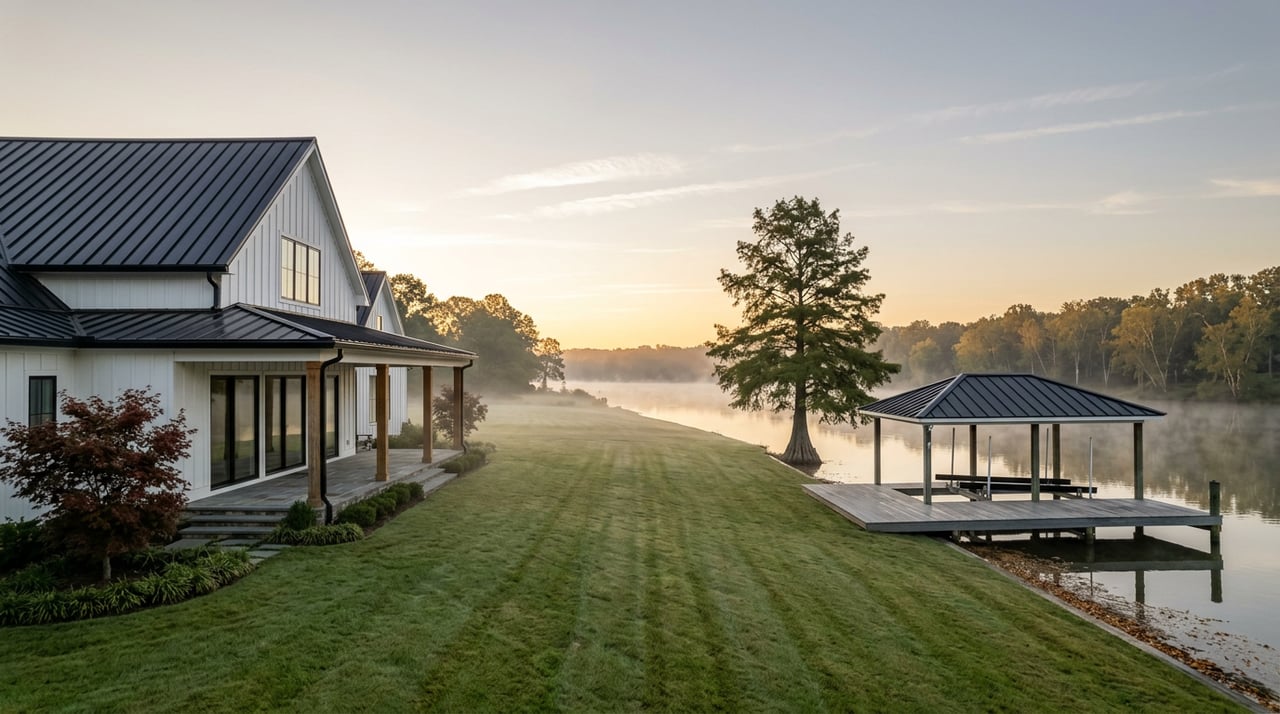
What to Know About Lake Hamilton Dock Permit Transfer at Closing
September 10, 2026
September 10, 2026
A buyer signs the closing documents on a Lake Hamilton property in June, thinking the covered boat slip out back came with the deed the way the roof and the water heater did. Six weeks later, the first hot Saturday of summer, that buyer calls Entergy to ask about repairing a loose board on the dock and learns the structure is sitting on a permit that still has the previous owner's name on it. Nobody transferred it. Nobody told them they needed to.
That gap between what a buyer assumes conveys and what actually does is the piece of Lake Hamilton real estate that never makes it into a listing description, and it is worth understanding before you write an offer or sign a listing agreement on the water.
Lake Hamilton exists because Entergy dammed the Ouachita River with Carpenter Dam back in 1932 to generate power, and Entergy still owns and manages the shoreline today under a license from the Federal Energy Regulatory Commission. That license comes with a Shoreline Management Plan, and every dock, boat lift, seawall, or bit of riprap sitting on that shoreline exists because Entergy issued a permit for it.
Here is the part that catches people off guard: those permits are personal, not attached to the property the way an easement or a deed restriction would be. Entergy's own guidance is direct about it: a facility that was properly permitted for one owner is not automatically valid for the next one, even if nothing about the dock itself changes. The physical structure conveys with the sale. The legal right to have it sitting in the water does not, at least not until the new owner applies to put it in their name.
This matters more than it sounds like it should, because new-facility permits at Lake Hamilton are only good for one year. If a seller built or re-permitted a dock right before listing the house, hoping fresh construction would help the sale, the buyer isn't just inheriting a nice-looking dock. They're inheriting a permit clock that may already be most of the way to expiration, with a transfer process still ahead of them after closing.
For a buyer, that turns "when was the dock built" into a real due diligence question, not a nice-to-know detail. For a seller, it means the timeline you built the dock on and the timeline your buyer will actually get to use it on are two different things, and it is worth knowing which one you're selling before you list.
Entergy runs the permitting process, but Entergy is rarely the only party with a say in what happens at the shoreline. A single dock repair or dredging project can pull in several agencies at once, each reviewing a different piece of the work.
| Agency | What it reviews |
|---|---|
| Entergy Arkansas | Shoreline placement, dock permits, drawdown compliance |
| U.S. Army Corps of Engineers, Vicksburg District | Dredging, excavation, riprap, bulkheads, and cut-in docks under its General Permit 60 |
| Arkansas Department of Environmental Quality | Water quality certification and erosion control |
| City of Hot Springs Planning and Garland County Planning | Local zoning and shoreline building permits |
| Arkansas Game and Fish Commission | Boating, navigation, and safety |
| Arkansas State Historic Preservation Office and the Caddo Tribe | Ground-disturbing work under Entergy's Historic Properties Management Plan |
None of these steps is unusual on its own. What's unusual is how many of them can stack up for a single project, and how few buyers or sellers realize the dock they're transacting on sits inside that stack until a repair or a resale forces the question.
If a dock needs dredging or the lakebed underneath it needs silt removed, that work can only happen during the winter drawdown, and the review to get there can take up to four months once every agency has had a look. A buyer who closes in June and discovers a permit or depth problem is not fixing it that summer. They are waiting for winter, and possibly the winter after that if the paperwork doesn't clear in time.
That single fact changes how a buyer should think about timing an offer on a property with a dock in questionable shape. It also changes how a seller should think about disclosure. A dock that needs work is not a cosmetic issue the way a scuffed floor is. It is a seasonal one, and heading into fall, the winter drawdown window that makes lakebed work possible is still months out, which means a problem discovered today doesn't even start its clock until winter arrives.
Years ago, Entergy set a rule requiring 7 feet of water depth at the end of a dock ramp, specifically to reduce how many docks need to be relocated every year when the lake level drops for the winter drawdown. Floating docks are especially sensitive to this, and the rule exists because plenty of them weren't sitting where they needed to be once the water came down.
For a buyer, that means a dock that looks perfectly positioned in July might not clear the depth requirement once the lake drops in the winter. Entergy has been clear on the underlying principle:
"All project lands or water require a permit from Entergy Arkansas prior to installation or placement."
A dock built without checking depth at drawdown level is a dock that might need to move, and moving it means going back through the same permit process described above.
Pull Lake Hamilton numbers from three different sources and you get three different stories. Redfin's most recent full read, the three months ending May 2026, put the median sale price at $414,752, down 7.5% from the same period a year earlier. Homes.com's June 2026 figures put the median home price at $493,400, with an average sale price closer to $360,342. Narrow either data set to waterfront listings specifically and Redfin's own numbers show a median listing price of $388,000 across 62 active waterfront homes.
Part of that spread is just measurement. Sale price and list price aren't the same thing, and Redfin counted only 16 total home sales and 5 waterfront sales in a recent month, a sample small enough that one or two unusual properties can swing the median hard in either direction.
But part of it is something a portal has no way to capture. A dock with a current, transferable permit and a clean depth reading at drawdown is a different asset than a dock with a lapsed permit and a lakebed dispute waiting to happen, and no median price separates the two. Two homes can list for the same number and close for very different real costs once one buyer discovers they're starting the permit process from zero and the other isn't.
For buyers:
For sellers:
Does the dock automatically convey with the sale of the house? The physical structure conveys as part of the real property. The Entergy permit authorizing it to sit on the shoreline does not transfer automatically and needs to be reissued in the new owner's name.
How long does a new owner have to transfer the permit? Entergy doesn't publish a universal grace period, which is exactly why this should be handled at closing rather than left for later. If the existing permit is close to its one-year expiration on a new facility, transferring quickly matters even more.
What if the dock needs dredging or repair right after I move in? If that work involves the lakebed, it can only happen during the winter drawdown, and the multi-agency review to approve it can take up to four months. Plan around the season, not the calendar quarter you happen to close in.
If you're weighing a purchase on Lake Hamilton, or getting ready to list a home with a dock attached to it, this is exactly the kind of detail worth walking through before you're staring at it mid-transaction. Lindsey & Krystina Realtors work Hot Springs and the Lake Hamilton shoreline regularly, and a free consultation is the easiest way to find out where your specific property stands before you write an offer or sign a listing agreement.
Stay up to date on the latest real estate trends.


Lindsey & Krystina Realtors
Lindsey Blaylock
(501) 317-9782
[email protected]
Krystina Bullard
(501) 303-0344
[email protected]