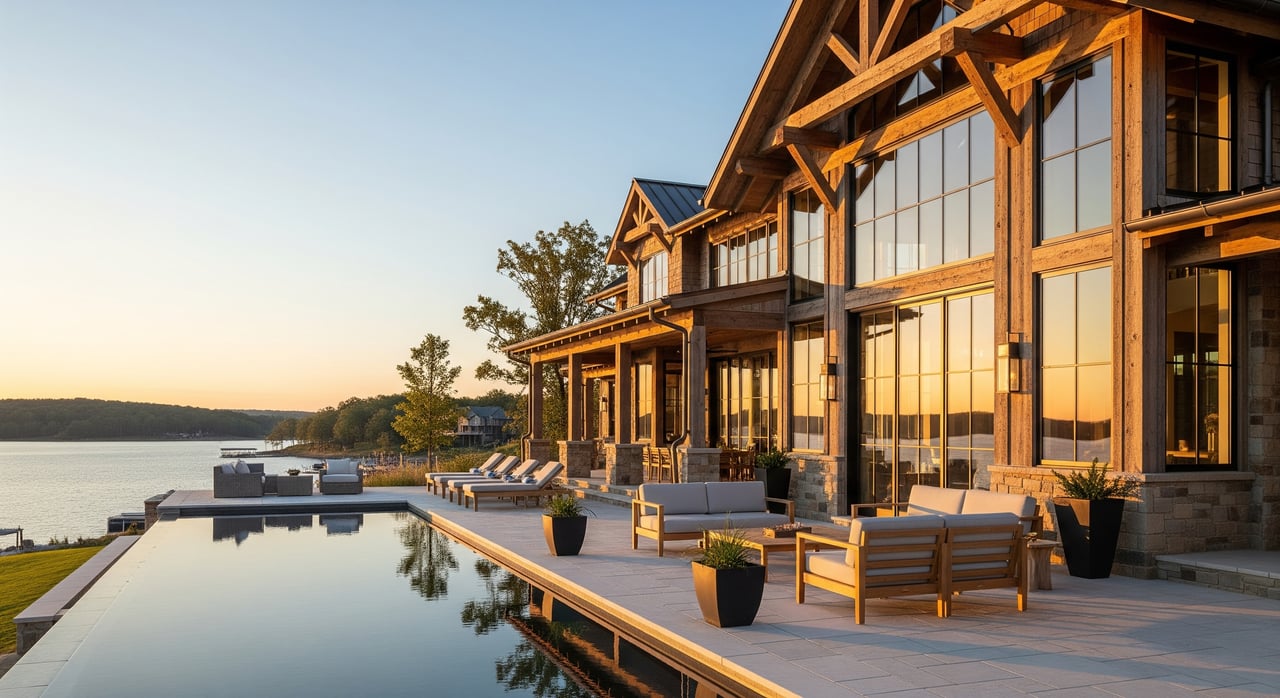
Should You Build or Buy in Hot Springs Village?
January 15, 2026
January 15, 2026
Can’t find the right home in Hot Springs Village, or wondering if building from scratch is the better move? You are not alone. In a gated, amenity-rich community like HSV, the right choice depends on your timeline, budget, and appetite for customization. This guide compares building and buying in HSV, explains the POA and ARB rules, and outlines clear next steps so you can move forward with confidence. Let’s dive in.
If you want deep customization and can wait, building can be worth it. If you want speed, predictability, and immediate use of HSV amenities, buying an existing home is usually the faster path. HSV’s Architectural Review and permitting add time and steps to any new build, while existing homes can often close within 30 to 60 days.
Building in Hot Springs Village means coordinating with the Property Owners Association, securing Architectural Review approval, and managing permits and utilities in addition to standard construction steps. The total timeline for a custom build commonly runs 9 to 18 months or more, depending on plan complexity, site conditions, builder scheduling, and weather.
Each step can introduce delays, especially ARB revisions, permit backlogs, weather, and material lead times. Having a detailed plan and a builder familiar with HSV helps.
Hot Springs Village is governed by the HSV Property Owners Association. The ARB enforces covenants, conditions, and restrictions designed to maintain the community’s character. Expect standards around setbacks, height, roof pitch and materials, exterior colors, driveways, decks and porches, fences, landscaping and tree removal, and where you can park RVs or boats.
You must have ARB approval before starting work. Applications usually require complete plans and specifications and may include fees or deposits. Starting without approval can result in stop-work orders and fines.
Building permits and inspections are issued at the county level. HSV spans county lines in parts, so confirm which jurisdiction applies to the specific lot. Septic systems and wells fall under Arkansas Department of Health rules, and the Garland County Health Department oversees on-site wastewater permits.
Not every lot has the same utility setup. Some have community water and sanitary sewer, while others may need septic or different hookup solutions. Bringing utilities to the site, installing a septic system, or drilling a well can add cost and time. Site conditions like slope, rock, soil, tree protection, setbacks, easements, and any floodplain considerations can also shape your budget and design.
Construction loans work differently from standard mortgages. They typically have interest-only draw periods, require a builder contract and budget, and involve inspections before each draw. Many buyers use construction-to-permanent loans that convert to a regular mortgage once the home is complete.
Lot financing may be a separate loan with different underwriting. Government-backed programs such as VA or USDA may be options depending on borrower qualifications and property eligibility. Check eligibility maps and speak with a lender early to understand your best route.
Resale value can benefit from quality and location, but overly customized designs may narrow buyer appeal later. Balance personal preferences with broader market sensibilities.
Buying an existing HSV home is typically faster and more predictable than building. From accepted offer to closing, most transactions complete in 30 to 60 days, depending on financing type and contingencies.
You can see the finished product in real time, including landscaping and how the home sits in the neighborhood. You also know your near-term costs and timing with greater certainty.
In HSV, you will review POA documents to understand dues, rules, and any assessments. If the property uses a septic system or private well, include those inspections during due diligence. This helps you avoid surprises after closing.
Conventional, FHA, VA, and USDA mortgages are commonly used for existing homes, subject to property eligibility and condition. Compared to construction loans, the process is more standardized and requires fewer moving parts.
Amenity communities like HSV often have thinner inventories than larger metro suburbs, and activity tends to be seasonal. Lakefront and golf-course homes can move quickly. You will also see a healthy supply of vacant lots, many of them wooded or sloped.
Because inventory fluctuates by price point and property type, check current MLS data and recent sales in your target areas. If you are set on a specific view or orientation, a lot might be the best way to achieve it. If you prioritize convenience, buying an existing home often wins.
Use this quick checklist if you are weighing a lot purchase and new build in HSV:
For existing homes, add general, termite, and system-specific inspections as needed, review POA disclosures, and verify dues and any special assessments.
Whether you build or buy, the right plan starts with clear information and a team that knows HSV. We will help you compare options, line up financing, and connect you with trusted local builders and inspectors so you can move forward with confidence. Schedule a free consultation or request a free valuation if you are also planning a sale. Connect with us through Bailey & Company Real Estate.
Stay up to date on the latest real estate trends.
Lindsey & Krystina Realtors
Lindsey Blaylock
(501) 317-9782
[email protected]
Krystina Bullard
(501) 303-0344
[email protected]